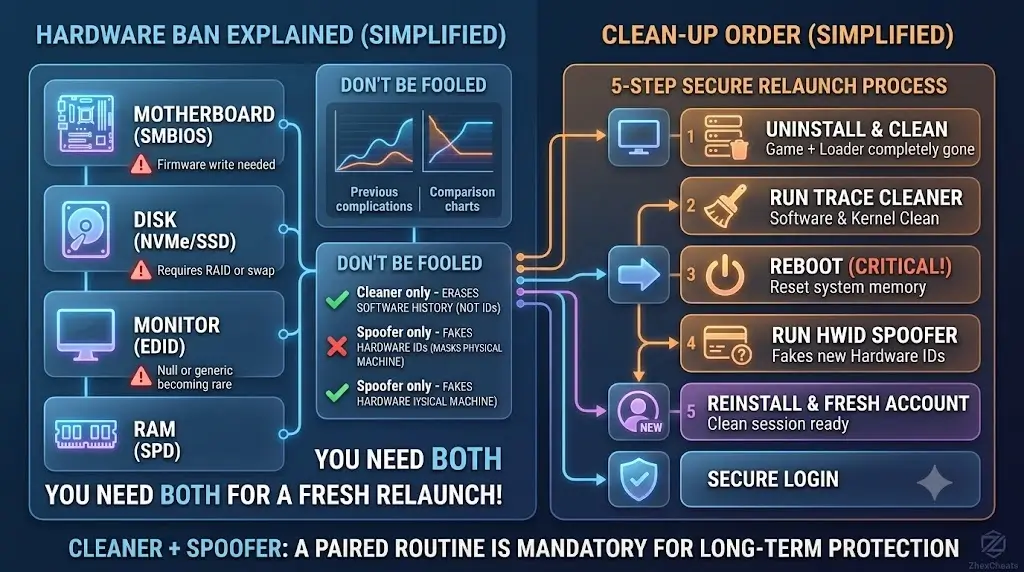
What a hardware ban actually targets
Most players picture a hardware ban as a slightly angrier account ban. It is not. An account ban blocks a login. A hardware ban blocks a machine, and it does that by fingerprinting the physical components inside it rather than anything you typed into a signup form. Delete the account, register a new email, the fingerprint from the old session is still sitting in the anti-cheat's database waiting for a match.
The fingerprint is built from serial numbers, and serial numbers exist for reasons that have nothing to do with anti-cheat. Manufacturers use them for warranty tracking, inventory, and fraud prevention on returns. BattlEye, EasyAntiCheat, Vanguard, Ricochet, and ACE simply read what is already there and store it the first time your account gets flagged. Every anti-cheat listed here already runs on titles most of this audience plays daily.
That is the part a software-only spoofer can only half solve. A registry edit changes what Windows reports. It does not change what the motherboard's firmware reports, what the disk controller reports, or what the monitor reports over its own data line. Those three keep telling the truth unless something intercepts them directly.
The eight components that carry a fingerprint
A modern PC is not one identifier. It is a cluster of them, spread across firmware, storage, and peripherals that most players never think about as "identity" at all.
| Component | What gets fingerprinted | Software-only fix works? |
|---|---|---|
| Motherboard (SMBIOS) | Serial number, UUID, asset tag burned into firmware ROM | No, firmware write required |
| TPM module | Endorsement Key, unique per chip, not per motherboard | No, physical chip swap required |
| Disk drive (NVMe/SSD) | Controller-level serial, reported below the OS | Partial, RAID or hardware swap needed |
| Monitor (EDID) | Manufacturer ID and serial reported over HDMI/DP | No, requires EDID reprogramming |
| RAM module (SPD) | Serial and asset tag on newer DDR4/DDR5 kits | No, requires an SPD programmer |
| Network adapter (MAC) | Hardware address burned into the NIC chip | Partial, adapter-level only |
| USB peripherals | Mouse, keyboard, headset serials on some branded devices | Depends on brand, many ship with null serials |
| Windows identifiers | MachineGuid, Product ID, SID | Yes, but only this layer |
The row that trips people up most is the disk. Players assume swapping the SSD clears the flag, and on some anti-cheats it does. The problem is scale. Replacing a drive after every ban is expensive and slow, which is exactly why the RAID trick covered in the next section exists.
Temporary spoofing versus permanent firmware writes
The word "spoofer" gets used for two completely different approaches, and mixing them up is the single most common reason a fresh account gets caught within days.
// What each method actually changes
Permanent firmware writes are not a casual weekend project. The tooling that OEMs use to write SMBIOS data during manufacturing exists for system builders and repair technicians, not end users, and running it while an anti-cheat's kernel driver is active is how systems get bricked or bans get triggered mid-write. Anyone attempting a firmware-level change reinstalls Windows afterward as a baseline precaution, every time.
Temporary spoofing avoids all of that risk by never touching the firmware at all. A kernel driver sits between the anti-cheat's query and the real hardware response, substitutes a consistent fake value for the duration of the session, and unloads cleanly. Nothing on the motherboard changes. Nothing needs to be backed up before you start. That tradeoff, zero physical risk against a rebuild every session rather than a permanent one, is why session-based spoofing is the standard approach in a legitimate HWID Spoofer product rather than a firmware flash tool.
Why RAID hides a disk and why TPM does not care about your motherboard
Two pieces of this puzzle confuse people more than the rest combined, and both come down to where the identifier actually lives.
RAID 0 across a single NVMe drive sounds pointless for performance since there is nothing to stripe data across. That is not why it gets used here. AMD's RAID implementation abstracts the underlying disk from the operating system more aggressively than Intel's does, which means less of the drive's real controller-level serial reaches software that anti-cheat can query. Intel RAID still exposes more of that raw disk data. It is a platform-level difference, not a marketing one, and it is the reason AMD boards show up disproportionately in ban-evasion hardware discussions.
That distinction, CPU-bound versus motherboard-bound, is easy to miss and expensive to get wrong. A full motherboard replacement solves the SMBIOS row in the table above. It solves nothing for TPM.
The fingerprints nobody checks: monitors and RAM
Two identifiers get almost no attention in most ban discussions, and both have become more relevant as manufacturers add serials to parts that never used to carry them.
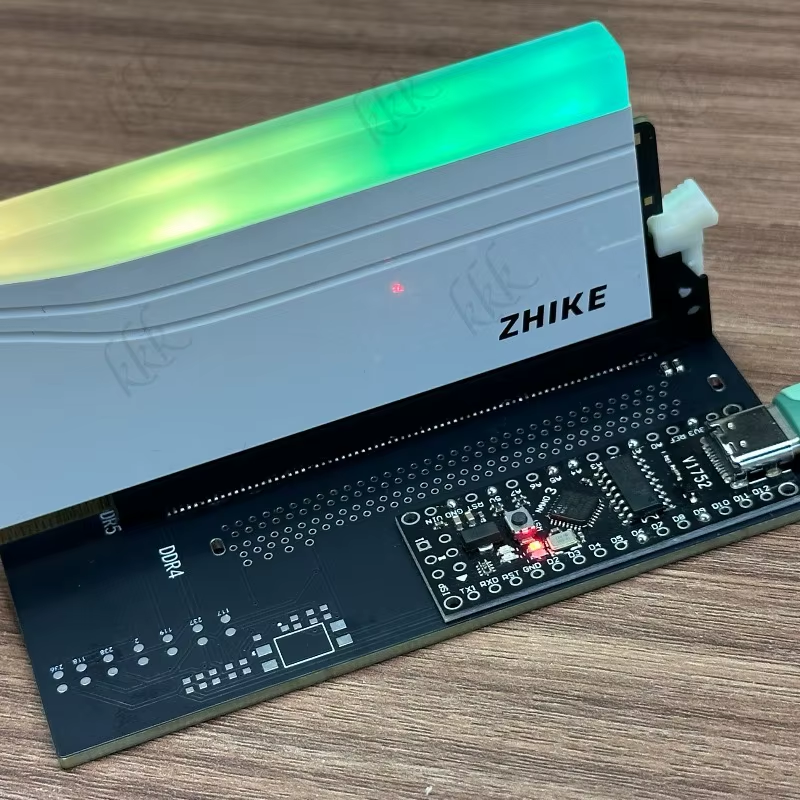
A monitor reports its own EDID data (manufacturer, model, serial number) directly to the graphics card over HDMI or DisplayPort. Some anti-cheats log it. The fix is not obvious because it sits outside the PC entirely; the data comes from the display, not from Windows. One workaround is buying monitors with null serials from the factory. The more flexible option is a device that sits physically between the graphics card and the monitor, reprograms the EDID data in transit, and can generate a fresh serial without opening the monitor itself.
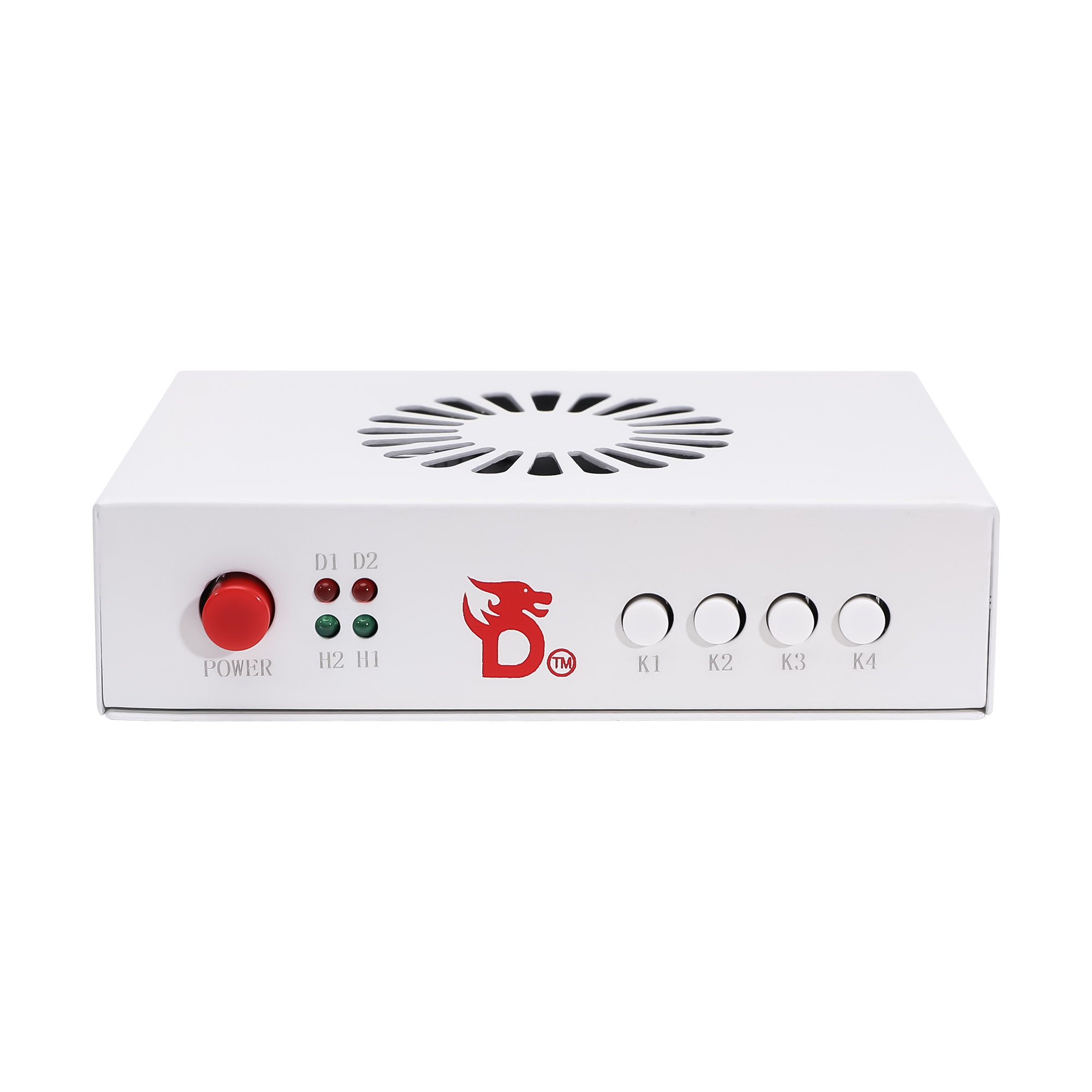
RAM is the newer problem. DDR4 and DDR5 kits historically shipped with null or non-unique SPD (Serial Presence Detect) serials, which is why RAM barely came up in hardware ban discussions until recently. That has started changing as manufacturers add real serials, partly to reduce warranty fraud and partly because anti-cheat vendors started asking for it. A quick PowerShell check tells you where a given kit stands:
Get-CimInstance Win32_PhysicalMemory | Select-Object Manufacturer, PartNumber, SerialNumberA result showing all zeros or an obviously generic string means the kit was never uniquely identified in the first place. A real, distinct serial per stick means the module can now be logged and matched, the same way a disk or a motherboard can.
How deep each anti-cheat reads into firmware
Not every anti-cheat pulls from the same depth of the stack, and the difference determines how much of the table in section two actually matters for a given game.
Vanguard sits at the top for a structural reason, not a policy one. Its driver loads before Windows finishes booting, on systems where TPM and Secure Boot are already required, so it gets first access to firmware data before anything else on the machine has a chance to intercept the query. That timing is also its weak point. A spoofer that does not win the race to load before Vanguard initializes only spoofs queries that happen after the original fingerprint was already recorded.
EA Javelin's lower score reflects a newer, narrower rollout across EA Sports FC titles rather than a permanently lighter footprint. Coverage tends to expand with each patch cycle, not shrink, which matters for anyone assuming a currently thin check stays thin.
What actually closes the gap
Firmware rewrites and physical chip swaps solve the problem permanently, at the cost of real risk: a bad write can brick a board, and every step assumes you already backed up the factory values before touching anything. That is not a fit for someone who wants to be back in a match this weekend, not next month.
The practical middle ground is a spoofer that covers the full identifier surface at the driver level rather than one or two registry values. Disk, SMBIOS, MAC, and volume identifiers all get intercepted the same way, before the anti-cheat's query ever reaches the real hardware, so nothing on the actual motherboard or drive changes and nothing needs to be reflashed between sessions.
That is the model the ZhexCheats HWID Spoofer is built on. For titles like Escape from Tarkov and PUBG, both running BattlEye's firmware-level checks, and Valorant, where the TPM Endorsement Key check described above is the harder problem to solve, session-based spoofing paired with a proper trace cleaner closes the practical gap without anyone touching a soldering iron. EA Sports FC players heading into EA FC 27 face the same Javelin coverage expansion noted in the bar chart above, and the same driver-level approach applies there too.
None of this replaces buying clean secondhand hardware in the first place. It does mean a ban does not have to end in a motherboard teardown to come back from.
// More articles
 Game Hacking Guides
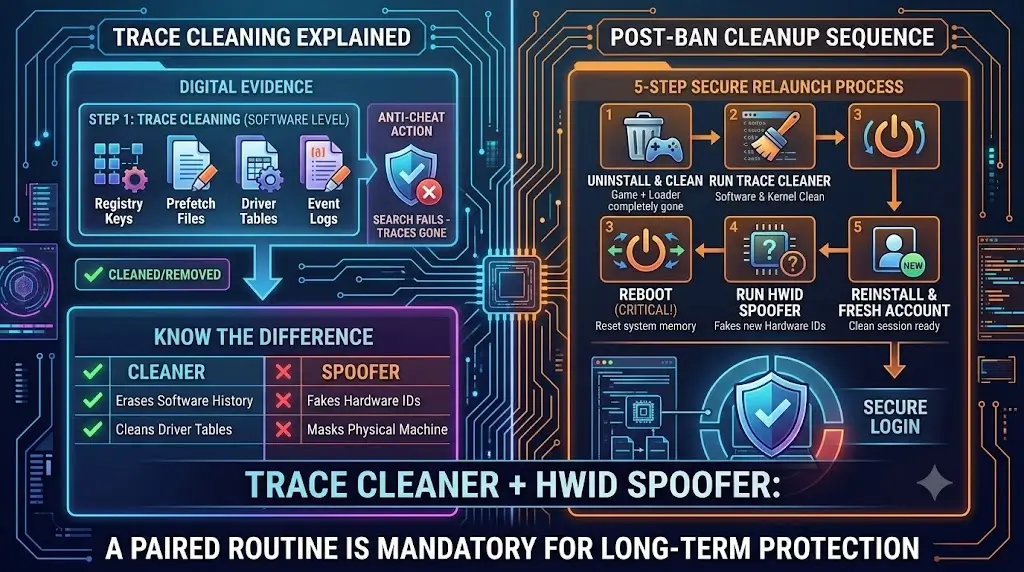
Trace Cleaning Explained: What Stays on Your PC After a Ban
Registry keys, prefetch files, driver load history: the records anti-cheat reads after a ban, and why a cleaner and an HWID spoofer are not the same tool.
Jul 14, 2026Nathan ReedRead article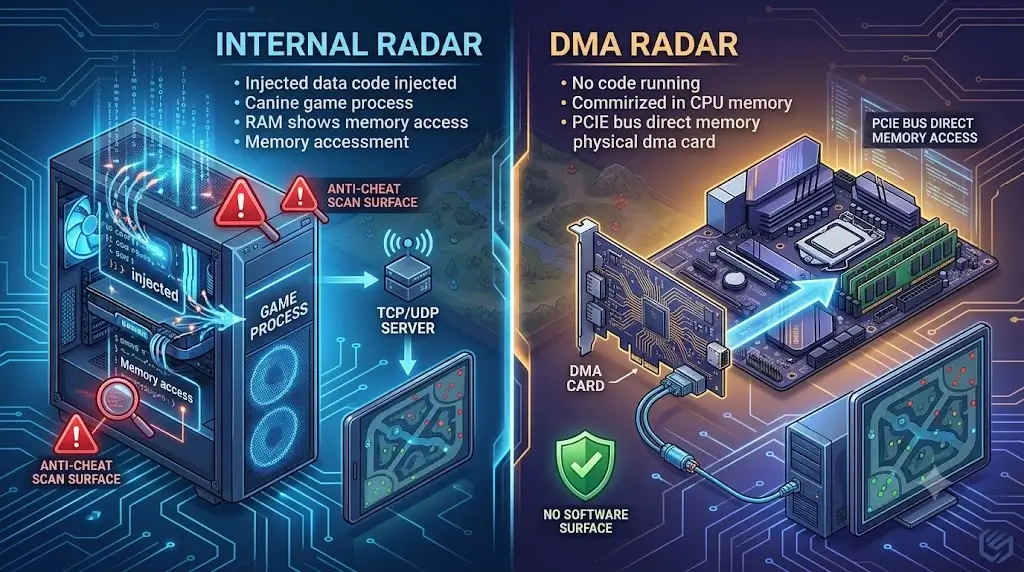 Game Hacking Guides
Radar Hack Explained: How the 2D Map Reads Every Player Position
A radar hack draws a second map that shows every player on the server in real time, without touching the game's renderer. Here is how it actually works.
Jul 12, 2026Nathan ReedRead article Game Hacking Guides
How to Read a Cheat Vendor's Ban History (And Spot Fake Logs)
Days-undetected counters, patch logs and testimonials are trivial to fake. The eight signals that separate real vendors from rebranders.
Jul 11, 2026Nathan ReedRead article Game Hacking Guides
Kernel Cheats Explained: What Ring 0 Means in 2026
Ring 0 is where anti-cheat lives. A cheat that stays in user mode is fighting from outside a locked room. Here is what kernel access actually means.
May 31, 2026Nathan ReedRead article